Studio updates and articles


For the Love of Insects

22 June 2021

It is Insect Week this week 21-27 June 2021. It is an initiative to help us understand the importance of insects by The Royal Entomological Society

I love insects, always have done. One of my first books was The Observer’s Book of Common Insects and Spiders and my copy was published in 1966.

It is interesting to read it again now as it shows how some species have declined rapidly over a 50 year period. In the section on Woodland butterflies it states ‘The High Brown Fritillary also flies in woods during July, and in the heat of the day likes to haunt open clearings where thistles are in flower’

It was very common then but is now classed as Critically Endangered on the Butterfly Red List for Great Britain

Much of my artwork has a backstory and sometimes that relates to insects. Some insect species have evolved so that their larvae emerge at the same time as the plants they feed on. Because of changes in environmental and farming practices these are increasingly becoming out of sync so when the larvae emerge there is no food for them, and this has knock on effects up the food chain.

For example this year 24% of blue tit clutches failed due to weather conditions which meant that the oak tree budded later than usual so the winter moth caterpillars had nothing to feed on and so the blue tits had no caterpillars to feed themselves or their young.

One million species of insects have been identified worldwide but it is estimated that there could be 10 million different species in total. They are the largest and most diverse group of animals on earth and are responsible for pollinating plants and crops, they are food for other animals and they also feed on animals and plants and some are scavengers breaking down waste such as dead animals and plants.

My favourite insects have to be bees, I keep honey bees and I have learned about many other species of bee too. Can’t live without them…..none of us can.

Find out more about insect week here and maybe you can give them some love too.
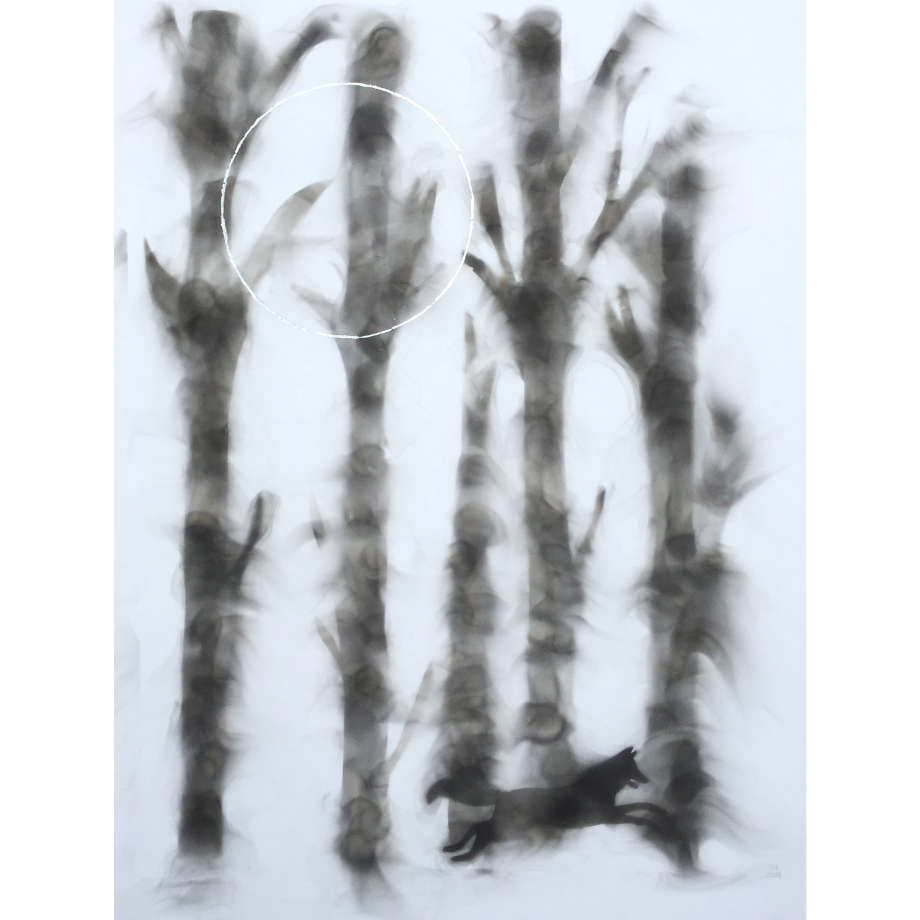
Slowly, silently, now the moon – inspiration for this artwork

7 June 2021

silver moon trees running wolf


Silver  (Walter De La Mare 1913)

Slowly, silently, now the moon

Walks the night in her silver shoon;

This way, and that, she peers, and sees

Silver fruit upon silver trees;

One by one the casements catch

Her beams beneath the silvery thatch;

Couched in his kennel, like a log,

With paws of silver sleeps the dog;

From their shadowy cote the white breasts peep

Of doves in a silver-feathered sleep;

A harvest mouse goes scampering by,

With silver claws and a silver eye;

And moveless fish in the water gleam,

By silver reeds in a silver stream.


This is one of the first poems I ever learned and I have never forgotten it because it creates such exquisite powerful visual imagery for me.

It is set in the countryside on a clear warm summer’s night and the mood is quiet and still. The moon moves slowly and silently, illuminating everything below it.

The ethereal appearance of the smoke used to make this artwork matches the ghostly transience evoked by the poem.

Slowly Silently now the Moon is currently at The Paragon Gallery in Cheltenham.

Dancing with Thieves – the inspiration behind the work

2 June 2021


five flying magpies silver glitter disco ball

I thought I would write about what inspires me and how concepts and ideas come together to create a new piece of work.

Dancing with Thieves has been in my mind for a while – I watch magpies outside my studio window every day, they are very sociable birds and I watch them taking chances and making choices – they are beautiful and never stop chattering.

I am fascinated by the folklore about magpies – there is a popular nursery rhyme about magpies that is derived from an old English folksong:

One for sorrow,
Two for joy,
Three for a girl,
Four for a boy,
Five for silver,
Six for gold,
Seven for a secret never to be told.

Five for silver  – magpies are said to steal shiny objects and such a magpie was the villain in an opera written in 1817 by Gioachino Rossini  called La Gazza Ladra –  known in english as The Thieving Magpie. The story tells of a maid who almost goes to the gallows for stealing silver, before it is discovered that the culprit was a magpie, which had been thieving and hiding items in the church tower.

So I thought, what if the magpies stole a disco glitter ball – what fun we could have dancing around it outside in the moonlight……..


The Hedgerow as Sanctuary – Inspiration for Art

4 May 2021

Until recently hedgerows did not feature directly in my artworks but brought together together many of the things that inspire me. I have always seen the hedgerow as a sanctuary for wildlife.


Hedgerows provide shelter, navigational aids, homes and travel corridors and are a food source for many small mammals, birds and insects.  I have a beautiful hedge in my garden that is home to many birds as well as a big fat rat that tries to steal their food.  I guess even rats need a sanctuary (and better my hedge than my house!) and they play their part in the ecosystem.


I did not know until I was researching for my article for the British Sundial Society (see earlier post) that in a local environment birds use solar clues such as shadows cast by hedges for orientation as this can show the direction of the sun and the time of day. Bats also use hedges for navigation at night.


Hedgerows are also important for capturing carbon from the air and helping the current climate crisis.


But despite all these positives, hedgerows are not as prolific as they once were and are often not managed properly.  This is partly due to changes in farming practices.


Hedges comprise of a number of different plant species and recently I have been making cyanotypes using blossom branches from blackthorn and willow.  Some of these cyanotypes were made later in the day when the sun was lower in the sky and this has added a really interesting shadow effect to the resultant images – showing them as the bird sees them for navigation maybe?cyanotype blue and white shadow of tree branch

Pollen

25 March 2021

As well as being an artist I am a beekeeper. It is a fascinating hobby and one which keeps me completely connected with the environment and the natural world.

As a beekeeper you become acutely aware of the changing seasons – the weather, the temperature and what plants are available or about to become available for the bees to forage for nectar and pollen which they use to feed themselves and their young as well as make honey which is their winter food supply.

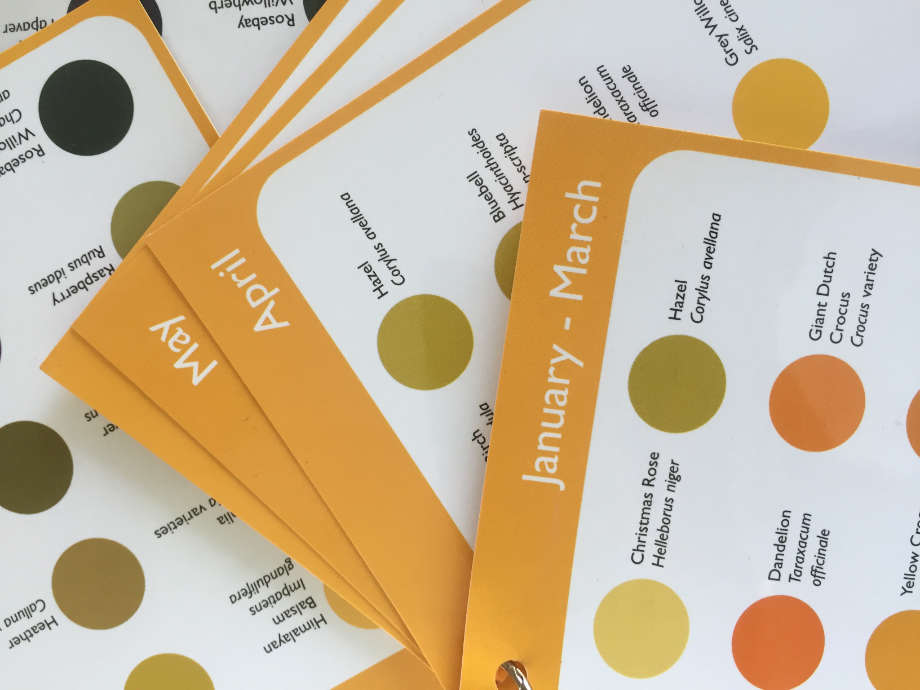
Pollen comes in so many different colours – I had no idea until I started keeping bees. By watching the bees come back to the hive from a foraging trip you can get a good idea of which plants they have been visiting by the colour of the pollen they are carrying on their legs. At the moment my bees are bringing in a lot of yellow pollen which will probably be from willow at this time of year.

When they start bringing in red pollen you know the horse chestnut tree is flowering and the pollen from poppies is black.

To help identify the different types of pollen I use this pollen chart which is not unlike a paint chart.

There is an artist called Wolfgang Laib who makes the most stunning artwork using pollen. I have admired his work for years – you can read about his work here

Collage Challenge

4 March 2021

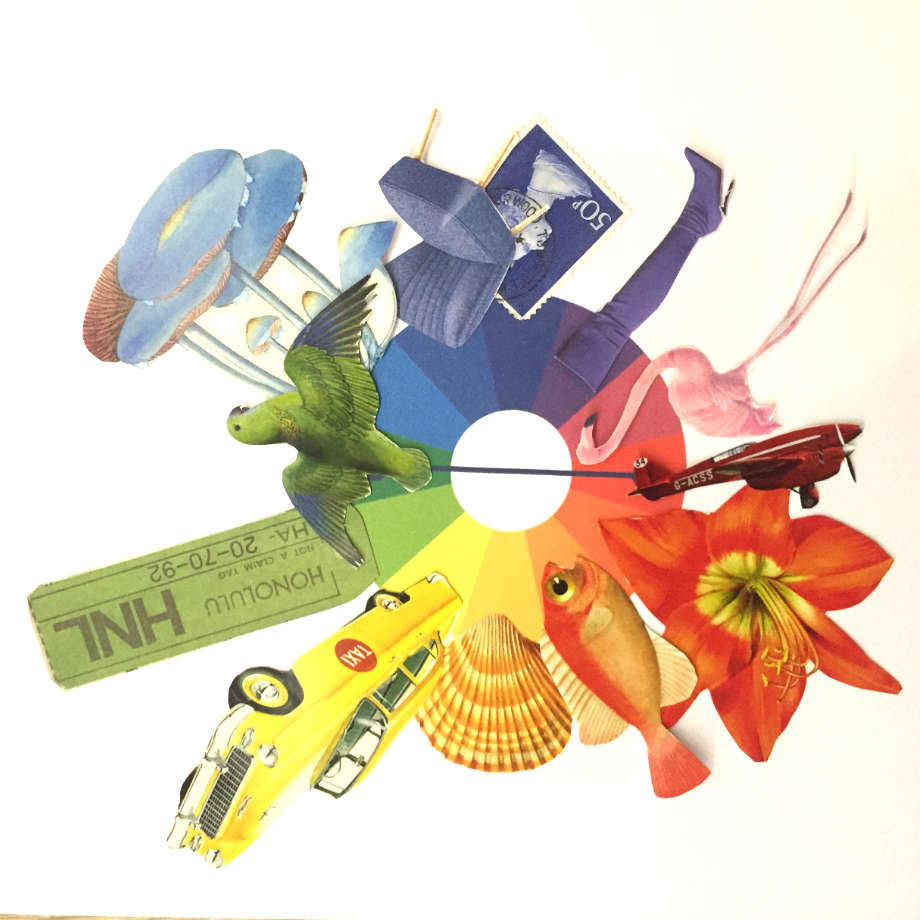
I love collage as an art form. I use it when I am exploring ideas for new work but in February I joined a challenge on instagram to post a collage each day from a word prompt. The word prompts were all supplied at the beginning of the challenge so there was the option to do all, or a few in advance but I chose to make one a day and only thought about it on the day. This challenge was organised by the Edinburgh Collage Collective @edinburghcollagecollective.

This is a great book to start with. It encourages you to let go of all preconceived ideas and inhibitions and has lots of hints and tips for creating collages as well as a pad of different images and papers that shouts “USE ME” on the cover. Letting go and seeing where things take you is surprisingly relaxing and exciting at the same time.

At Christmas I treated myself to the following book by Maria Rivens who is an amazing collage artist. As well as ideas for projects there are pages and pages of images to use to collage with.


I used this opportunity to both develop potential ideas for my cyanotypes, smoke art and paintings as well as experimenting outside my comfort zone.Here is one of my collages, the prompt was ‘paint’.

I enjoyed myself so much I am planning a series of prints of some of the collages that I created that will be going onto my website soon, so keep a look out for them!

To see the wonderful variety of work created during February on check out #februllage and #februllage2021 on instagram.

I discovered some brilliant artists and I hope you will too.


You can sign up to my newsletter and get posts like these in your inbox on a regular basis.